
Buildings with Glass Façades
30 Jun 2022 · Aarush S Gowda
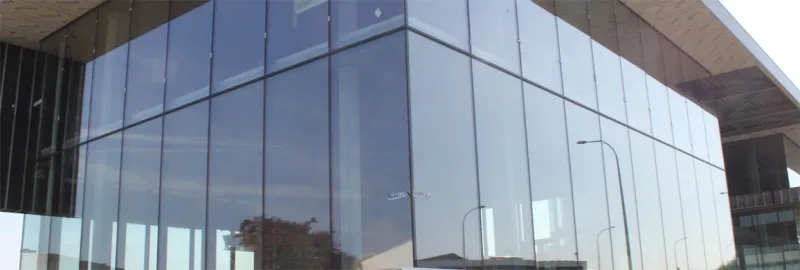
Buildings with Glass Façades
In present-day’s urban settings, glass facades are an easy way to glamorize modern and tall buildings. They connect you to your surrounding without any exposure to outdoor dust, smoke, and noise. In modern architecture, glass facades have now become indispensable components due to the sophisticated and chic look they offer. Not only malls, hotels, and health care facilities but also sports stadiums are incorporating glass in their building facades.
Today, there are various glass manufacturers and distributors that offer a wide range of choices including customization, cleaning, and maintenance.
Pros and Cons of Glass Facades
Let’s first look at the advantages and disadvantages of glass facades.
Advantages |
Disadvantages |
|
Provides aesthetical value to the building |
Results in a lot of glare to passers-by, especially vehicle-drivers |
|
Gives an unobstructed view of the outside with long windows |
Due to the transparency it offers, glass facades are considered less secure |
|
Transmits natural light in both directions |
Causes solar radiation, and acoustic problems |
|
Reduces the weight load on the foundation |
Not suited for earthquake-prone areas |
|
Easy maintenance with minimal cleaning |
Requires extreme care and skilled labour for cleaning |
|
Abrasion-resistant and offers more flexibility when used along with other materials |
Brittle and rigid material to work with |
There is, however, a solution to all these disadvantages. The current glass industry is well-equipped to tackle all these hassles and provide next-generation eco-friendly glasses with great insulation capacity.
Points to Consider When Building Glass Facades
Bear in mind a few important points before selecting a glass façade for any building.
- The amount of daylight penetrating inside the building makes a huge impact on the interiors. Buildings with well-designed facades offer excellent views of the surroundings and have a higher market value.
- A glass façade with enhanced solar shading is better able to handle the energy usage and helps in sustaining the building.
- Make sure to understand the chosen material’s Solar Heat Gain Coefficient (SHGC), which indicates the amount of direct heat that is let in. In simple words, SHGC measures the amount of solar energy transmitted through the glass material. Go for a glass that has a lower SHGC, as it offers low heat transmission and higher shading ability.
- The U-value of the glass being used for the façade is another important aspect to consider. This value refers to the insulating property of the glass, that is, how effective the glass is in regulating the temperature difference between the inside and outside of the building. Glass with a lower U-value offers better insulation.
- Different types of glass allow different amounts of light to pass through them. This capacity is measured through the percentage of Visible Light Transmission (VLT) or Visible Transmittance. Glasses with higher VLT allow a higher amount of light penetration.
- Using thicker glass will help maintain the building’s acoustics. For example, a 12 mm glass will provide better protection against intense traffic noises, when compared to a 6 mm glass. Filtering outside sounds is an important point to consider while planning a glass façade for a building. Noise-reducing insulation can minimize noise, thereby enabling higher productivity levels for the users.
- A proper access system must be put in place while the façade design is being planned and installed. This helps in integrating the façade with its design, even in the case of unconventional complex facades. Choosing the best access solutions at the very beginning of the planning process saves a lot of money and avoids future problems. Make sure a local expert is consulted in order to follow local regulations and safety standards.